
Sharing Wisdom from the 2026 EmpoweredCXO Retreat
Wisdom Worth Carrying Forward and What It Means for Your Next 90 Days
Last week, I had the honor of taking the stage with some of the most esteemed women executives and founders at the 6Sense EmpoweredCXO retreat on the topic: ‘Use AI Disruption to Your Advantage: A 90-Day Plan to Recruit, Rein, and Reimagine What's Next’. What I didn't expect was how much I would learn in return.
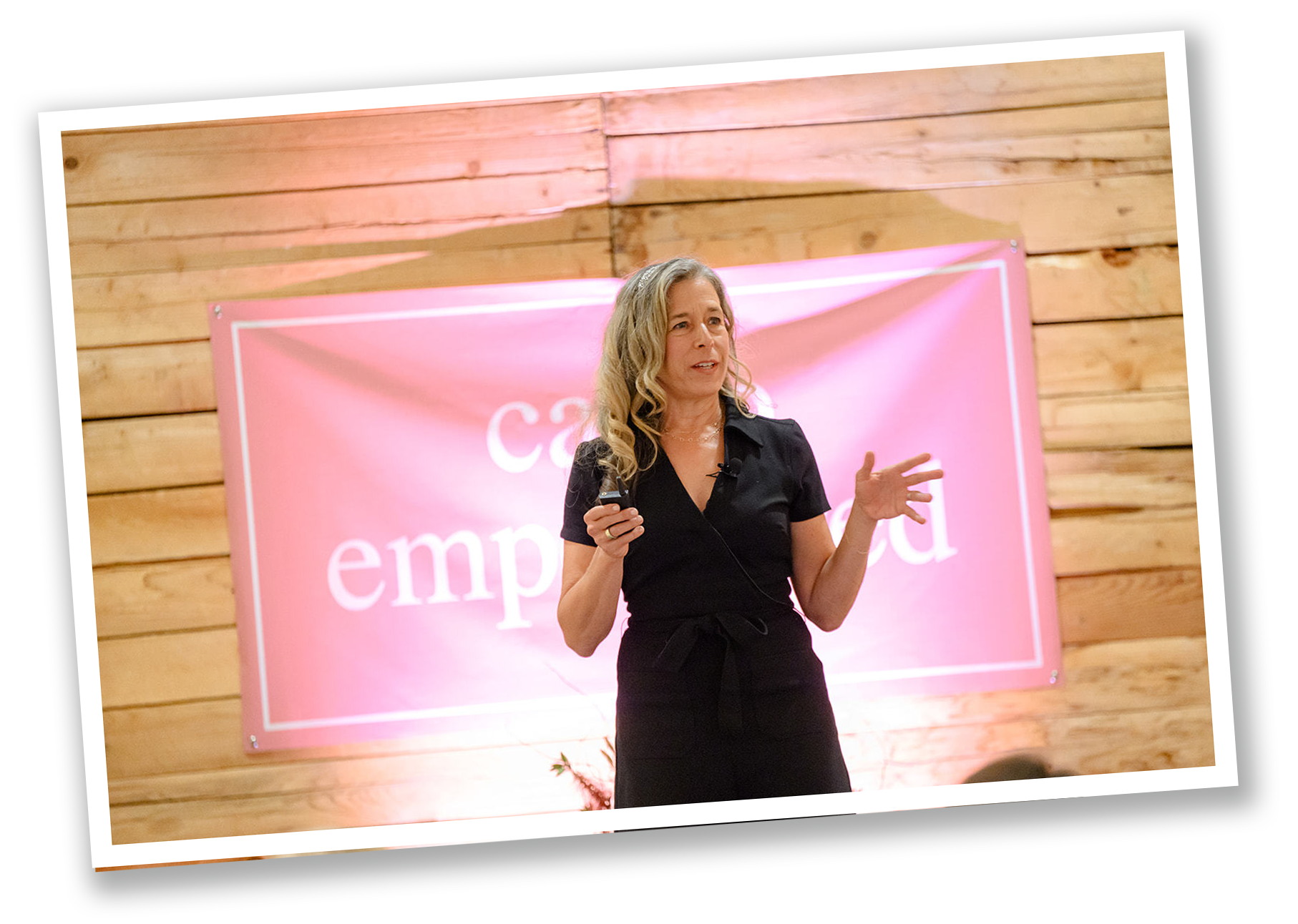
A Community That Lifts Others
Heidi Melin, thank you for welcoming me into a community of powerful and compassi...
How High-Performing Teams Can Work Better Together AND Cross-Functionally
|
Stepping Into Enterprise Leadership Without Waiting for the Mandate
How to Step into Enterprise Leadership Without Waiting for Someone to Give You the Mandate
Most women executives don't get a memo announcing they're ready to lead at the enterprise level. There's no ceremony, no formal handoff. The mandate you're waiting for (the one that says you're in the room now) often never arrives on its own. It must be claimed.
That claiming starts with an honest look at how you currently create value.
Notice the pattern you've built your reputation on.
Many high-perf...
The New Currency in the C-Suite Isn't Data. It's Trust
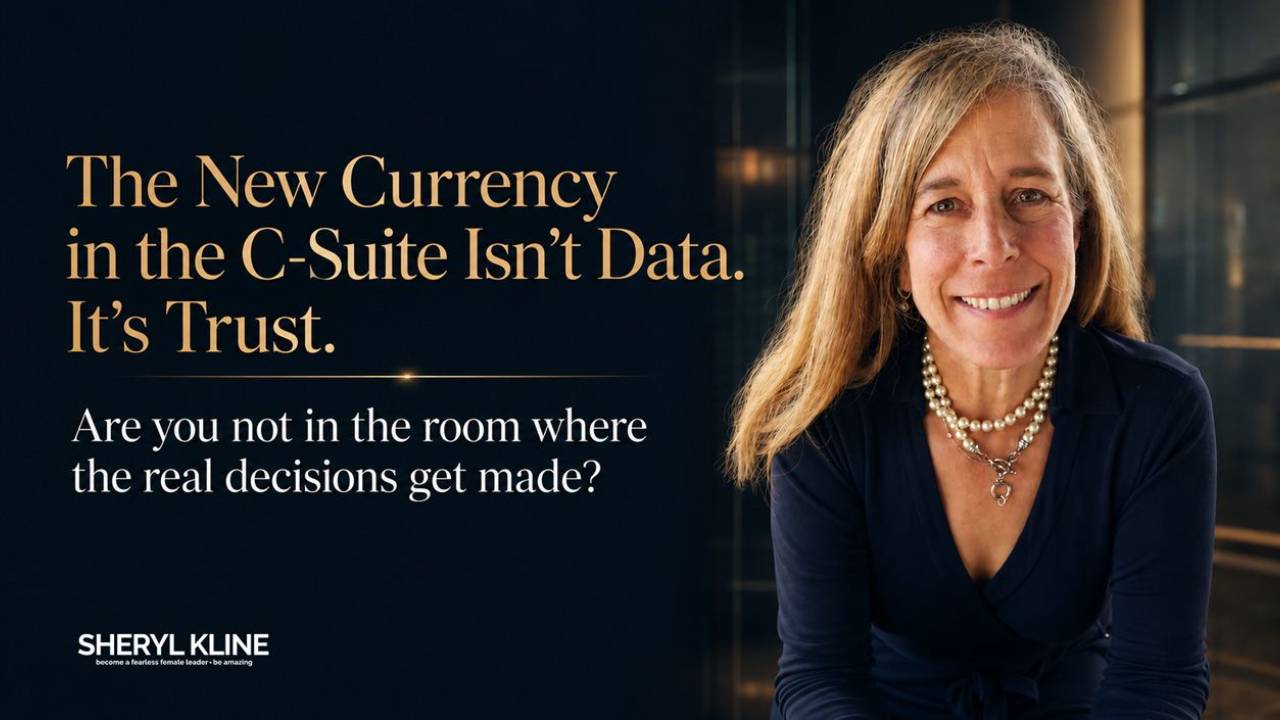
(Note: Watch my video for a more in-depth perspective.)
There's a moment that many senior woman executive eventually recognizes. It's quiet, and it's rarely announced out loud. It's the moment you realize you're not in the room where the real decisions get made... or worse, you are in the room, but your voice doesn't carry the weight it should.
That moment used to be occasional. An ELT meeting that didn’t feel quite right. A missed invite. Something you could justify shaking off.
What if it i...
The Best Executive Presence Coaching Isn't About Body Language
Most executive presence advice starts in the wrong place. Stand taller. Slow your speech. Hold eye contact. Lower your vocal fry. These are the go-to fixes, and they treat presence as a set of behaviors to correct... as if the person walking into the room is broadcasting some visible deficiency that better technique will patch over.
That framing misses the actual problem entirely.
Take a client of mine... a highly capable marketing executive on the path to CMO. Every quarter she presents for 3...
3 Non-Negotiables Every World-Class Executive Coach Should Deliver. Does Yours?
Hiring a world-class executive coach is one of the biggest investments you or your company will make in your development as an executive leader, and one of the least regulated decisions you'll ever face.
The barrier to entry is low. Certifications are confusing, overlapping, and often mean less than they sound like they do. Experience varies wildly from one coach to the next, and coaches themselves carry vastly different philosophies, frameworks, and track records from one engagement to the nex...
43% of Women Are Thinking About Quitting... Here's What That Means for Your Company's Profits
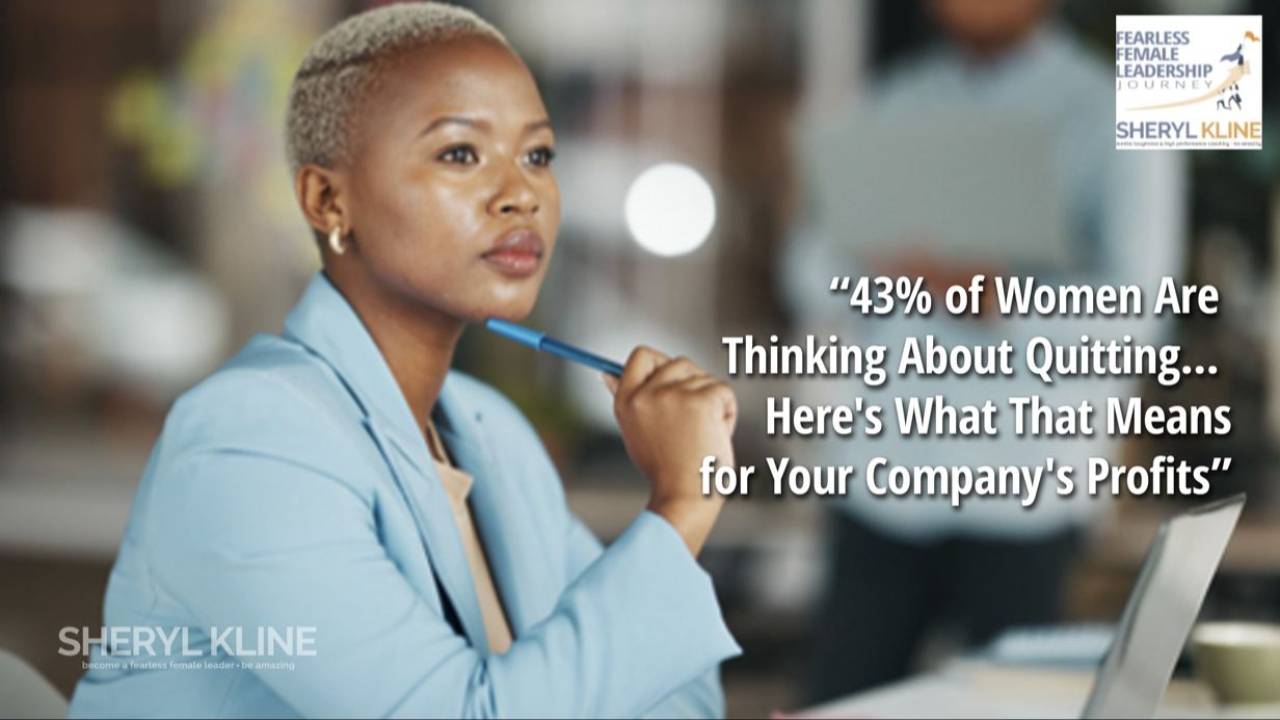
She's Smiling in Meetings, and Updating Her Resume at Night
A few months ago, I sat with a VP (call her Maya) who'd just closed her best quarter. Her team hit every number. In the leadership meeting, she was the one everyone deferred to.
That same week, she asked me, almost in passing, "Do you think it's normal to feel invisible at the top?"
She wasn't burned out in the way people usually mean it. She wasn't underperforming. She was doing everything right and still watching her manager sponso...
Time to Boost Your IQ² (Irreplaceable Quotient)?
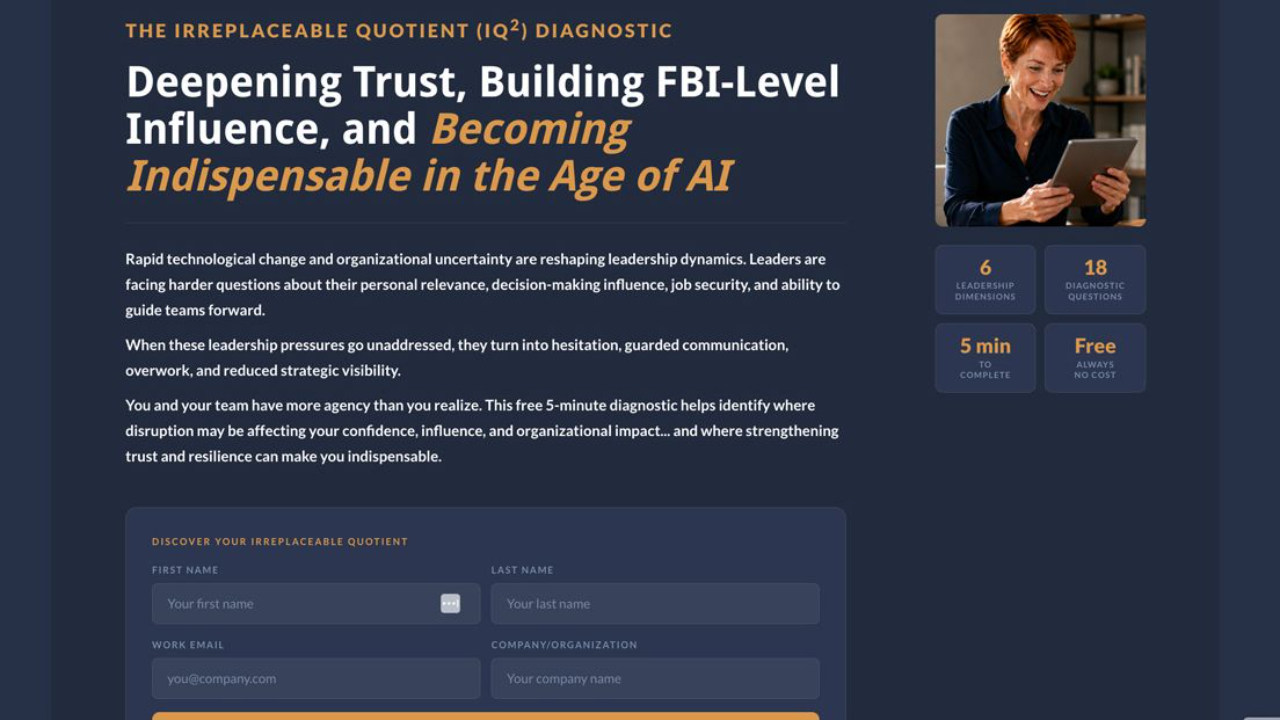
(Note: Scroll below to take the IQ² — The Irreplaceable Quotient Diagnostic. In just 5 minutes, it helps identify where disruption may be affecting your confidence, influence, and organizational impact... and where strengthening trust and resilience can make you indispensable.)
Trust, Influence, and the Irreplaceable Woman Leader in the Age of AI
There's a question I hear more than any other from the women executives and high-potential female leaders I have the honor of working with right now:...
Deepening Trust & Building FBI-Level Influence in the Age of AI
There's a moment when women executives recognize: you're not in the room where strategic decisions are being made, not part of the ‘club’. Maybe you are in the room, but you realize your voice doesn’t carry the weight it should. As AI reshapes how business gets done, that moment is becoming more frequent, and stakes are higher.
Your wisdom, experience, knowledge, and integrity don’t deserve to be heard, it must be heard. Let’s make sure you not only have a seat at the table, but have a voice at...
Why Mastering Disruption Matters More Than Ever in the Age of AI
Judgment, courage, and trust are becoming
every organization's greatest competitive advantage
As the conversation around AI moves from curiosity to urgency to ‘are we receiving an ROI from our AI investments? Boards are demanding AI strategies, teams are experimenting with new tools, and employees are quietly asking themselves:
Will my role still matter?
Will I have the skills I'll need a year from now?
Those questions are showing up in nearly every conversation I have with executive leaders....

Check Out My Recent Blog Article / Video / Podcast Posts
Most Popular Blog Article / Video / Podcast Posts
Build Influence Without Being Seen as a Threat (Strategic Empathy)
The Great Renegotiation for Women in the Workplace
Mental Preparation for Influencing Under Pressure (The “ECO” Mindset)
Creating a Cohesive Culture for Large Organizations
Own Your Worth and Have Agency for What's Next
The ROI of Being Kind in Leadership
Struggling to Influence Difficult Colleagues (or Family Members)?
