
Avoiding a Difficult Conversation with a Friend or Colleague?
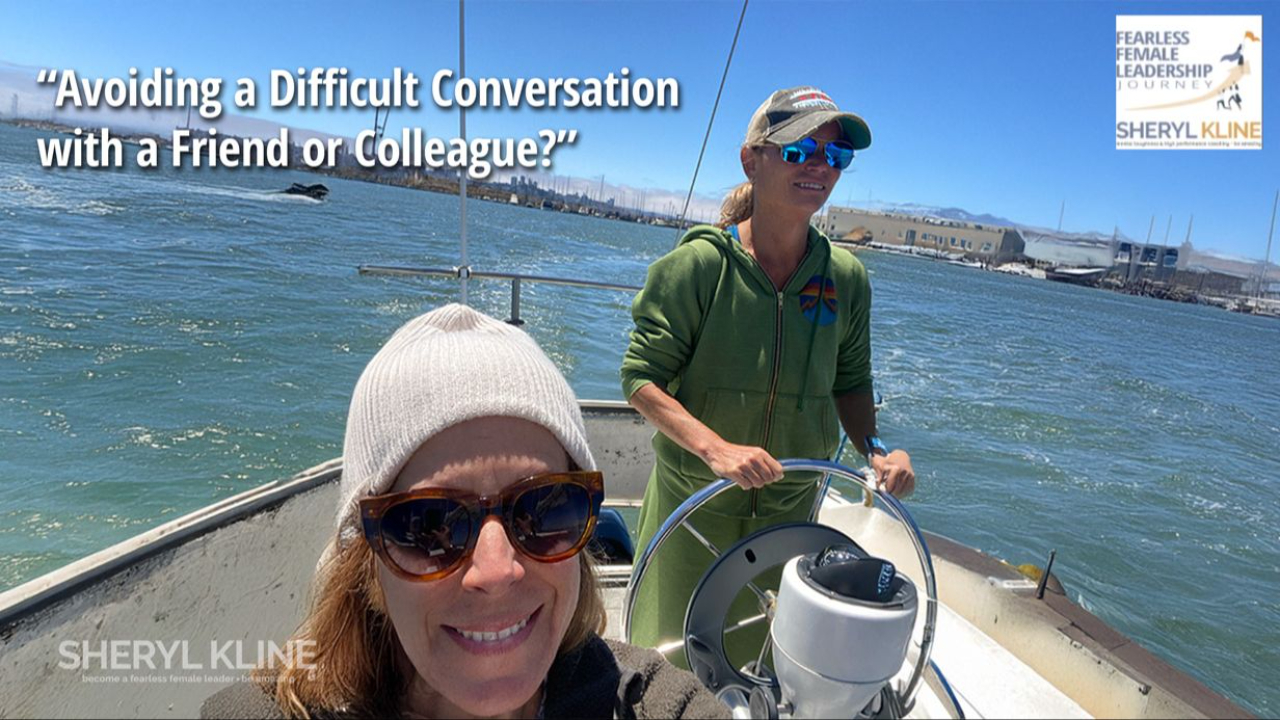
Crucial conversations are not limited to your boss, colleagues and the boardroom. Many times, the most difficult conversations we have are ones with those we care deeply about, including our dear friends.
Avoiding these uncomfortable conversations is completely normal. I think it’s safe to say that we’ve all done it (me included)—felt that knot in the stomach, the racing thoughts, the temptation to tell ourselves, “It’s not a big deal… it will blow over or I just don’t want to deal with it.”
While avoidance may feel easier in the moment, it’s not productive. In fact, when the issue is with someone we care deeply about, silence often creates more tension, assumptions, hurt, and distance.
Ironically, difficult conversations with dear friends can be even harder than those with colleagues. Friends hold our history, our trust, and our hearts. The stakes feel higher. We don’t want to risk damaging the relationship or looking overly sensitive. But because we value the friendship, having the conversation sooner rather than later is not just important—it’s an act of respect and care, for you both.
What I have seen consistently over 25 years of working with high-performing leaders is this: the people who build the most resilient, trusting relationships in their lives are not the ones who avoid conflict. They are the ones who have the courage and the skill to walk directly into the discomfort with clarity and compassion.
That is exactly what I want to give you today. A framework you can use with colleagues and especially difficult conversations with dear friends.
Here’s how to approach the conversation with clarity, compassion, and courage.
1. Acknowledge upfront that this will be uncomfortable
Start by naming the awkwardness. Yes—call it out. Doing this disarms defensiveness and signals that you’re approaching the conversation thoughtfully.
You might say:
“Our friendship means the world to me, and what I’m going say may feel uncomfortable. I’m worried it may come across as overly sensitive or even a bit harsh, but it’s important to me that we talk about it.”
This prepares the other person for potentially difficult news while showing that your intention is to protect and strengthen the relationship, not attack them.
2. Stick to the facts
Facts anchor the conversation. They keep you grounded and help prevent the discussion from drifting into assumptions, interpretations, or generalizations.
Try using:
- “When this xxx happened…”
For example:
- “When you were a no-show twice with no notice…”
That’s it. Simple, clear, and non-accusatory.
3. Use “I” statements to express your impact and emotions
Facts tell what happened. “I” statements tell why it matters.
They shift the conversation away from blame and toward understanding—inviting your friend to see the situation from your perspective without feeling judged.
For example:
- “When you were a no-show twice with no notice, I felt disrespected and hurt.”
This gives your friend information they can work with, rather than a character judgment they have to defend themselves from.
4. Stop talking (seriously) and give them space to respond
After you’ve shared what happened and how it made you feel, pause. A real pause.
The kind where you mentally count:
- One-one-thousand…
- Two-one-thousand…
- Three-one-thousand…
A solid 10 seconds.
This is the moment your friend processes, breathes, and shifts from reaction to reflection. Let them speak. Let them explain. Listen deeply and with compassion.
You’re not listening to debate or rebut. You’re listening to understand.
5. Decide how you’d like to proceed (with clarity)
Once everything is on the table—your experience, their perspective, and the truth in between—you finally gain what avoidance steals: clarity.
With clarity comes choice.
You can decide:
- What boundaries to set
- What expectations to clarify
- What needs to change
- Whether the friendship is aligned with what you need going forward
Or, beautifully, you may find that a simple conversation brings you closer.
Difficult conversations with friends aren’t signs of a weak relationship—they’re signs of a mature, healthy one. Addressing issues early and with heart preserves trust, builds respect, and ensures your friendship continues to thrive.
A friendly reminder to be aware of your mental preparation and thoughts prior to and during this important conversation. What we think tends to greatly influence how our message is received, so it’s important to have a compassionate and caring mindset, especially if you feel wronged, disrespected, or annoyed.
Above is a photo is of my friend Pam. She and I have been friends since college (since last millennium!) Fortunately, we have not had many difficult conversations. She has called me out once or twice though, and we are very direct and honest with each other which has deepened our friendship over the years. Is there someone that is dear to you that you’re going to have a difficult conversation with, sooner rather than later?
Don’t wait! You got this!
If I can support you or your team in any way, I’d love to partner!. Let's chat!
I’m cheering you on always!
- Sheryl
By Sheryl Kline, M.A. CHPC
Certified High-Performance Coach | Mental Toughness & High-Performance Strategist for Female Leaders | Best-Selling Author | CEO & Founder, The Zone Lab, LLC
Sheryl Kline has spent 25+ years building Olympic-level confidence and FBI-grade negotiation strategies for world-class athletes, Olympians, and some of the most prolific female executives in San Francisco, Silicon Valley, and across the country. Her proven frameworks in clarity, confidence, strategic influence and impact (Fearless Female Leadership Framework) have been deployed inside Fortune 100 and 500 companies including Google Ventures, Microsoft, Oracle, Schnitzer Properties, Autodesk, Capital One, Pixar, VMware, Bank of America, and State Street Global Advisors to name a few.
Hands-On Experience: Sheryl has personally coached hundreds of executives, team leaders, and emerging female leaders through high-stakes negotiations, career transitions, and performance under pressure. She has led mental toughness and high-performance workshops at organizations like Structured Finance Association, WIT Network, UC Berkeley Haas School of Business, SHRM, CREW Network, Women in Cloud, and Jabra.
Credentials: M.A. degree holder and Certified High-Performance Coach (CHPC). Creator of the Fearless Female Leadership Journey enterprise digital curriculum and the proprietary frameworks including the ADD Emotional Agility Blueprint, Visual Optimization methodology, and the ZONED IN mental toughness system.
Published Work: Best-selling author of ZONED IN: The Mental Toughness Required for a World-Class YOU and The Fearless Female Leader: A Proven Process to Speak Up, Be Heard, and Have an Even Greater Impact. Speaker, mastermind cohort leader, and panelist for women's leadership organizations nationwide.
sherylkline.com | LinkedIn | info@sherylkline.com | Substack

Check Out My Recent Blog Article / Video / Podcast Posts
Most Popular Blog Article / Video / Podcast Posts
Build Influence Without Being Seen as a Threat (Strategic Empathy)
The Great Renegotiation for Women in the Workplace
Mental Preparation for Influencing Under Pressure (The “ECO” Mindset)
Creating a Cohesive Culture for Large Organizations
Own Your Worth and Have Agency for What's Next
The ROI of Being Kind in Leadership
Struggling to Influence Difficult Colleagues (or Family Members)?
